
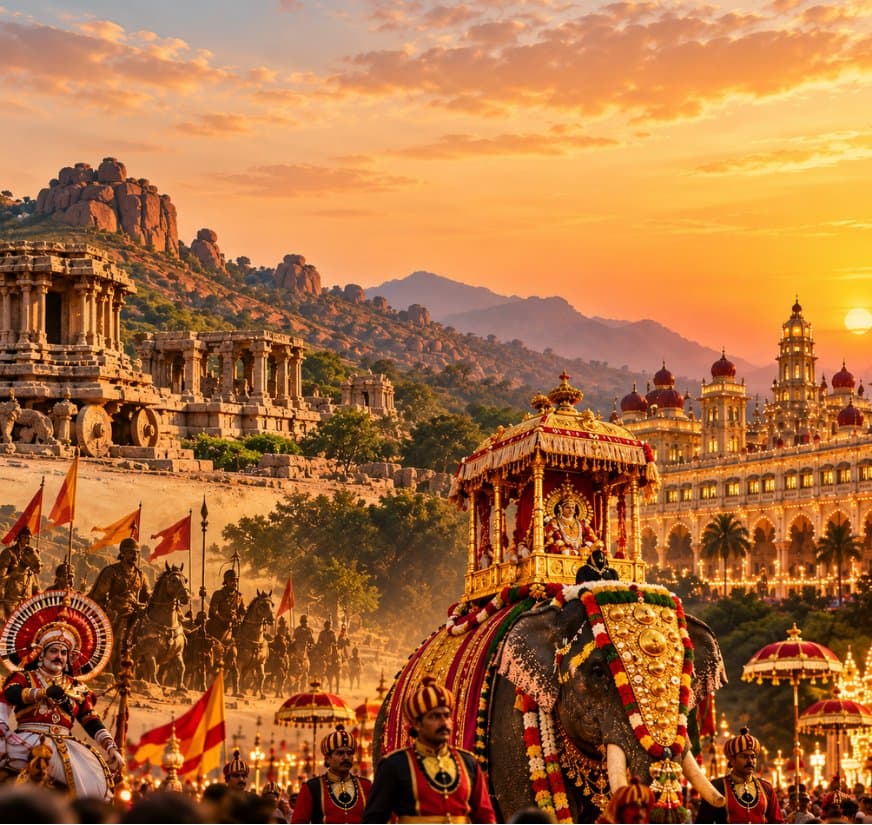
Festivals have always had a way of bringing people together. Beyond the rituals and celebrations, they create shared experiences, strengthen relationships and build traditions that last for generations.
Dasara is a beautiful example of this. From grand royal ceremonies to celebrations in family homes, Karnataka’s Dasara has evolved over centuries, shaped by the communities that celebrate it.
Here are nine fascinating stories from its history.
1. Before Mysuru, there was Hampi!
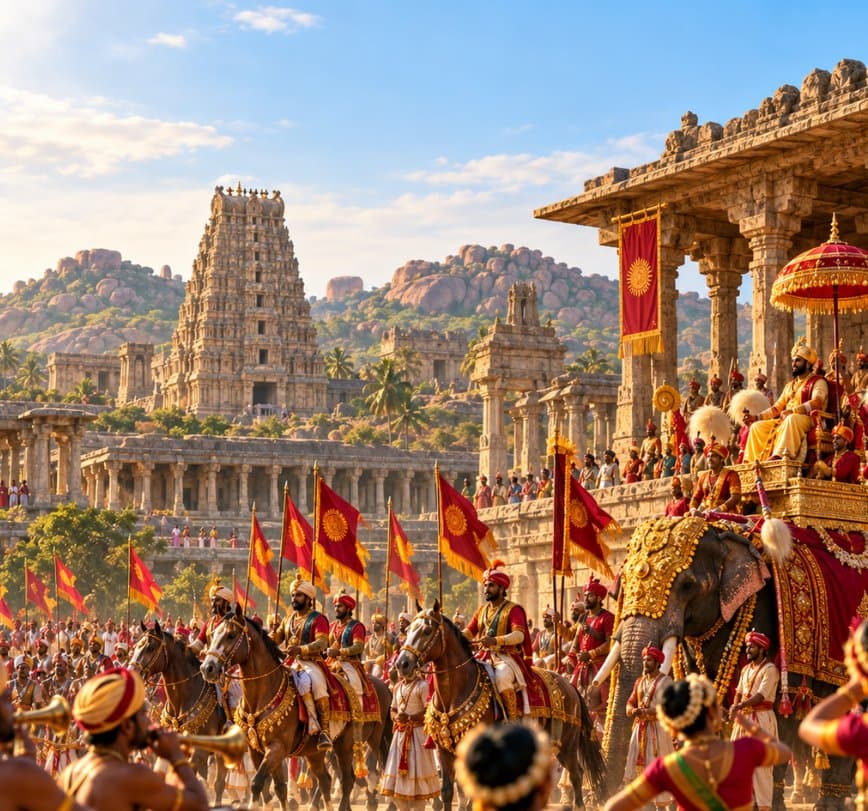
Centuries before Mysuru’s royal Dasara, the Vijayanagara Empire celebrated Mahanavami with grand military displays, music, dance and royal ceremonies. These festivities brought together people from different walks of life in a magnificent celebration of culture and tradition.
2. Hampi’s royal horses came from Arabia and Central Asia!
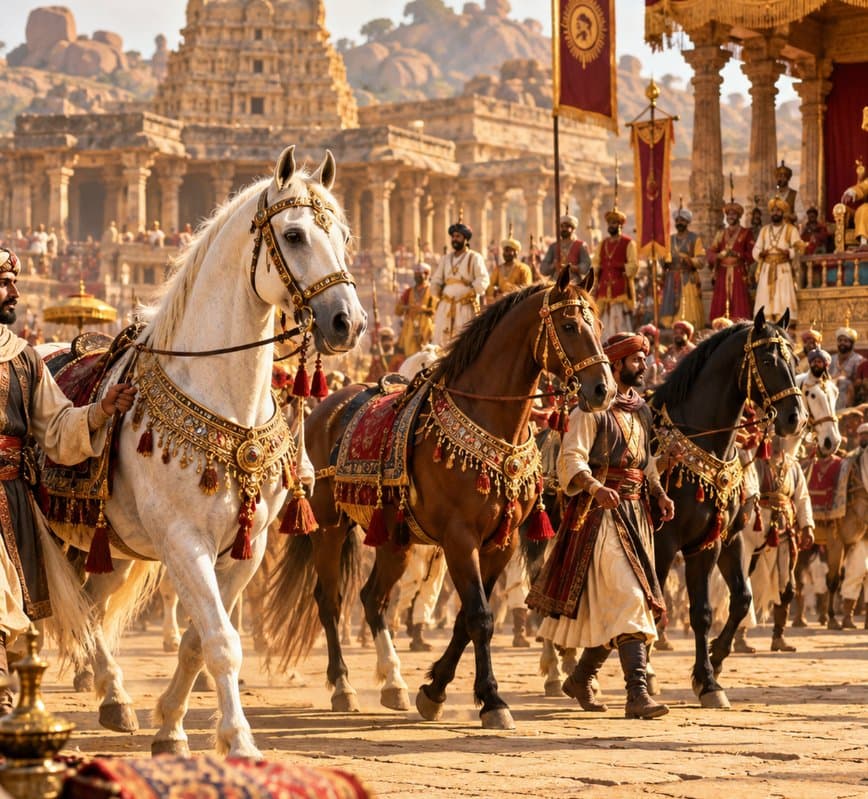
The Vijayanagara Empire imported prized warhorses through Persian Gulf trade routes and showcased them during Mahanavami celebrations. These horses reflected the empire’s extensive trade connections with distant regions.
3. Mysuru Dasara didn’t actually begin in Mysuru!
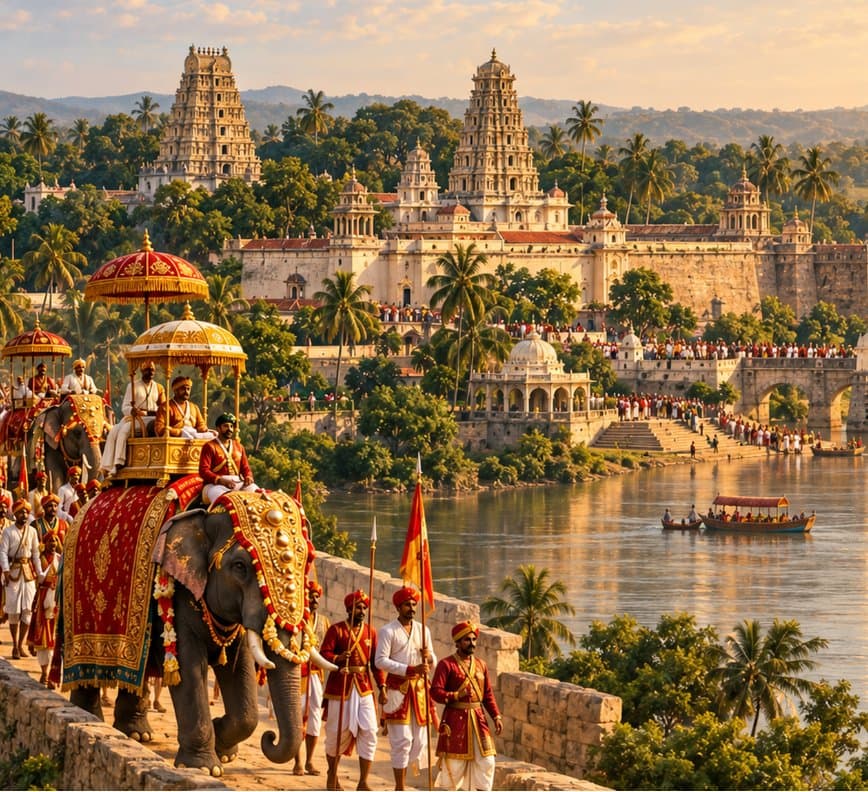
The Wadiyar royal tradition began in Srirangapatna in 1610, before moving to Mysuru in the early 19th century. Over time, the celebrations grew into one of Karnataka’s most recognised cultural traditions.
4. Imagine streets that smelled of perfume!
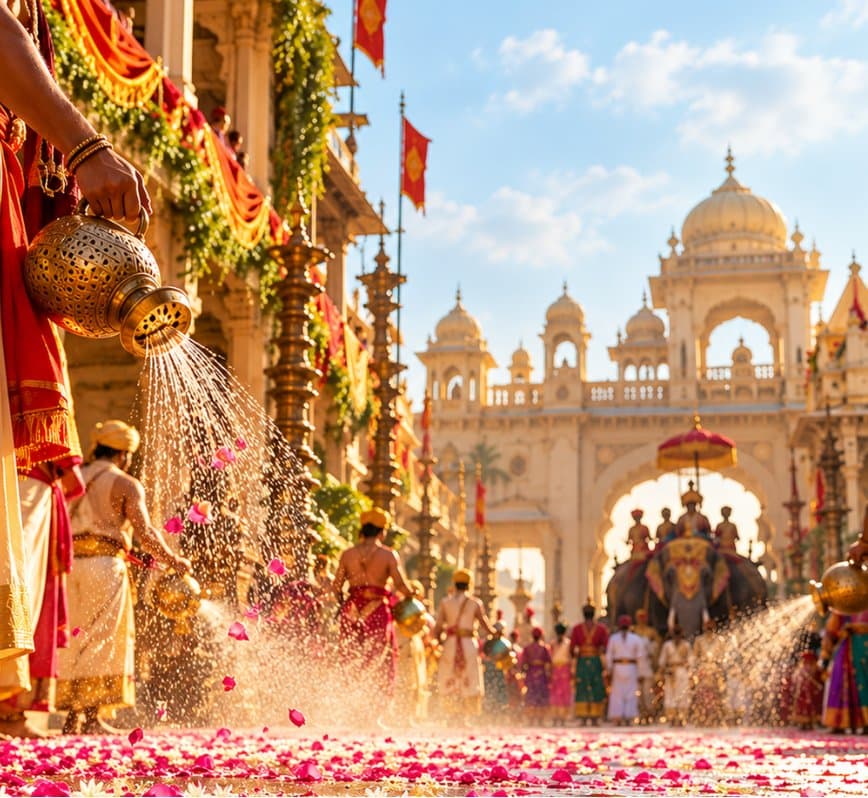
A 17th-century account describes Srirangapatna’s streets being sprinkled with fragrant herbal perfumes during Dasara. Imagine an entire town coming alive with festive preparations, creating an atmosphere everyone could enjoy.
5. London inspired a Mysuru Dasara tradition!
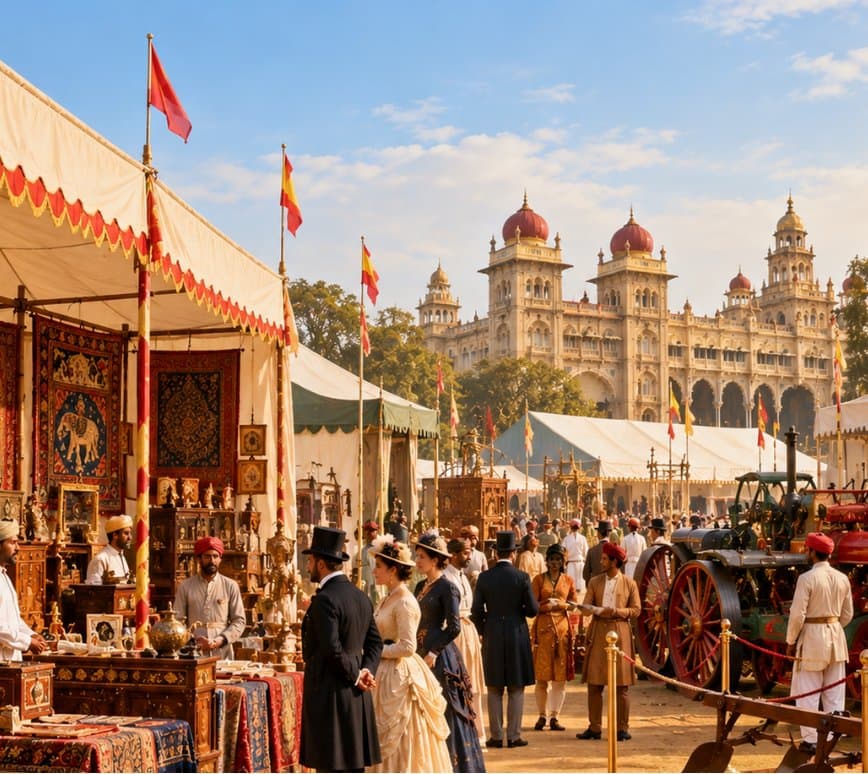
The Great Exhibition of 1851 in London helped inspire Mysuru’s 1888 exhibition, which showcased agriculture, industry and craftsmanship. The event brought together people from different fields, creating opportunities to exchange ideas, celebrate local talent and learn from one another.
6. Indian farmers competed against Europeans in ploughing contests!
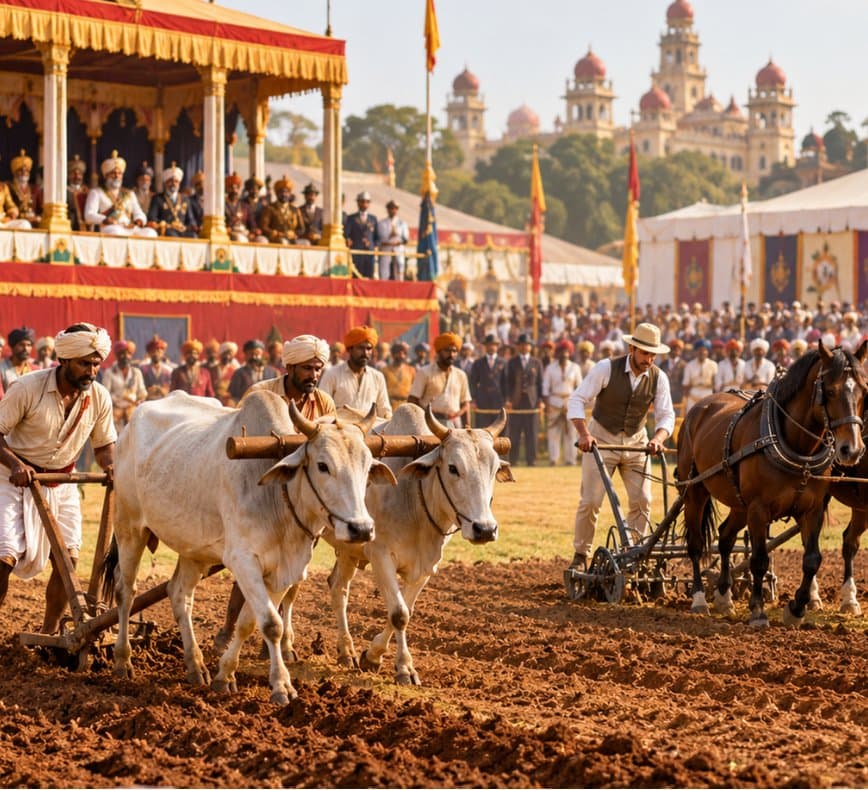
At Mysuru’s 1888 exhibition, local farmers competed using traditional ploughs before facing European competitors demonstrating foreign ploughs in the final round. The event reflected how Dasara also became an occasion for showcasing skills and exchanging knowledge.
7. The significance of Ayudha Puja and the tools behind our work
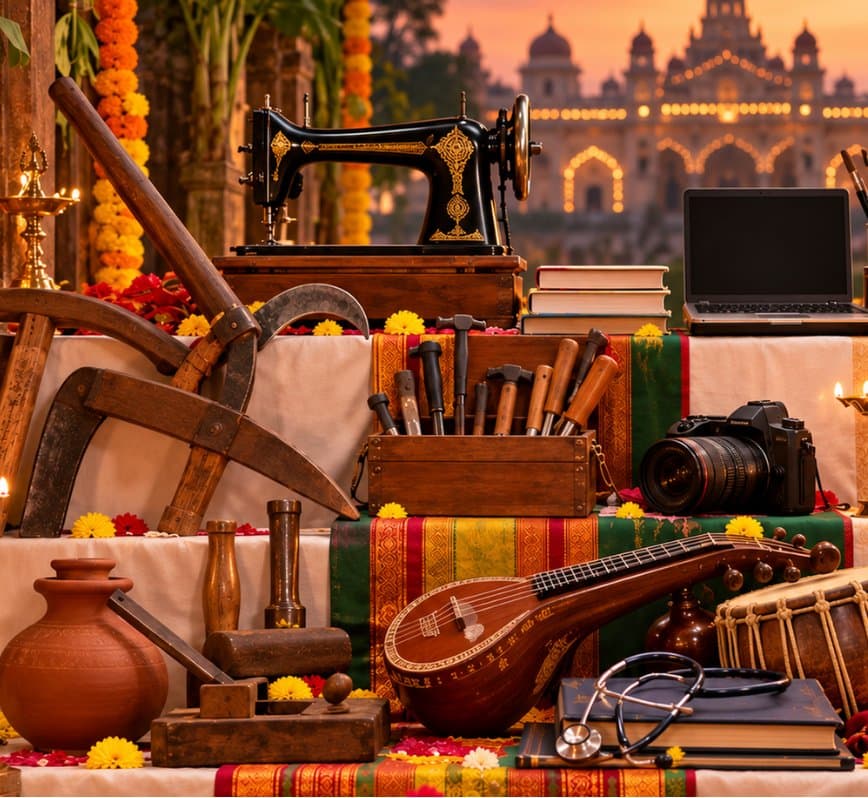
In Karnataka, Dasara celebrates Goddess Chamundeshwari’s victory over Mahishasura. While Ayudha Puja traditionally involved the worship of weapons, today it honours the tools, instruments and equipment that support our everyday work and livelihoods.
8. The reason why Gombe Habba dolls sit on nine steps
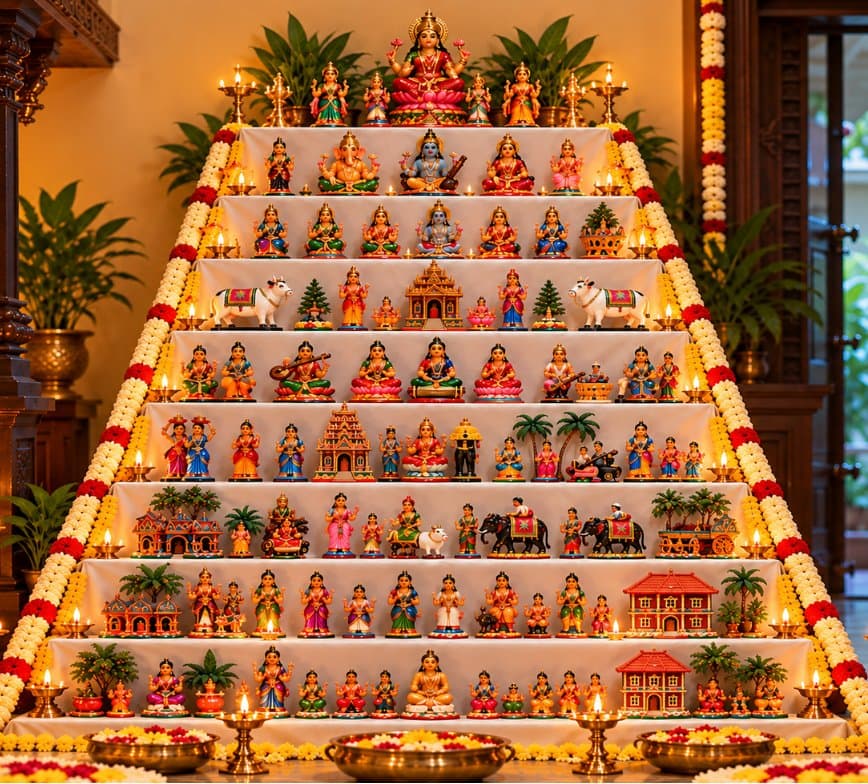
During Navaratri, families arrange dolls on decorated steps as part of Gombe Habba. The nine steps are traditionally associated with the nine nights of Navaratri, the nine forms of Durga and spiritual progression. The tradition also brings families and neighbours together through storytelling and festive visits.
9. A Bengaluru home once displayed 5,000 dolls to tell one epic story!
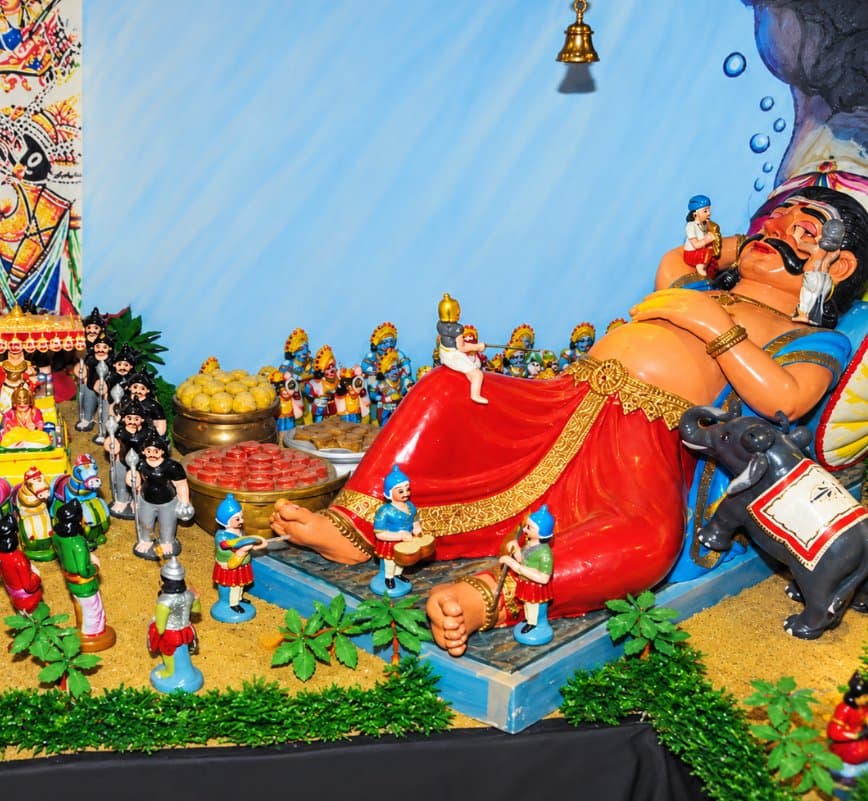
In 2017, a Basavanagudi family reportedly used around 5,000 dolls to recreate scenes from the Mahabharata during Gombe Habba. Their elaborate display showed how a family tradition could become a cultural experience shared with the wider community.
One Karnataka. Many ways to celebrate Dasara!
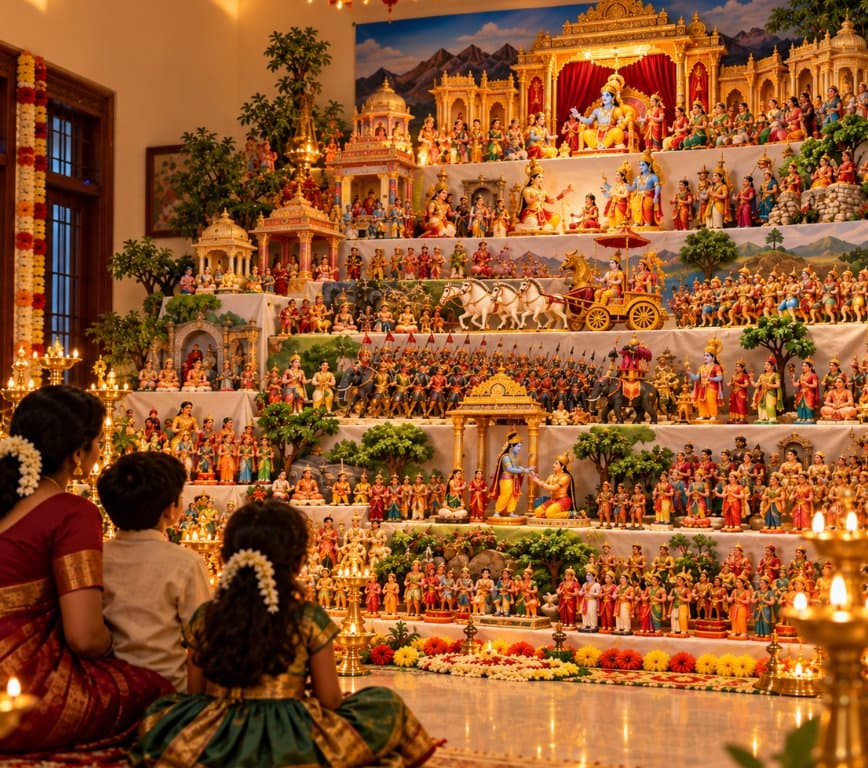
From Mysuru’s Jamboo Savari and Madikeri’s Karagas to Mangaluru’s processions and Bengaluru’s Gombe Habba, every region celebrates Dasara differently. Yet, the spirit of togetherness connects these diverse traditions.
When Communities Turn Celebrations Into Traditions
At Nandi Housing, we believe that these shared experiences become traditions that bring communities closer. Rituals make festivals truly special because of the people we share them with. When neighbours come together to celebrate, they exchange stories, discover different cultures and create lasting memories.
This spirit of togetherness is at the heart of our new project Nandi Meraki, a residential community in South Bengaluru developed by Nandi Housing. With thoughtfully designed shared spaces, resident-led activities and a focus on inclusive community living, Nandi Meraki encourages meaningful connections beyond the walls of individual homes.
Looking for a home where neighbours celebrate together? Come visit Nandi Meraki, where thoughtfully designed shared spaces bring the community closer, festival after festival.
Schedule your site visit today and experience Nandi Meraki firsthand. Located near Bannerghatta Road and close to Kalena Agrahara Metro Station, your future home is just a visit away.
Thinking about your next home?
Talk to our team about Nandi Meraki and Nandi Citadel, or explore our other stories.