
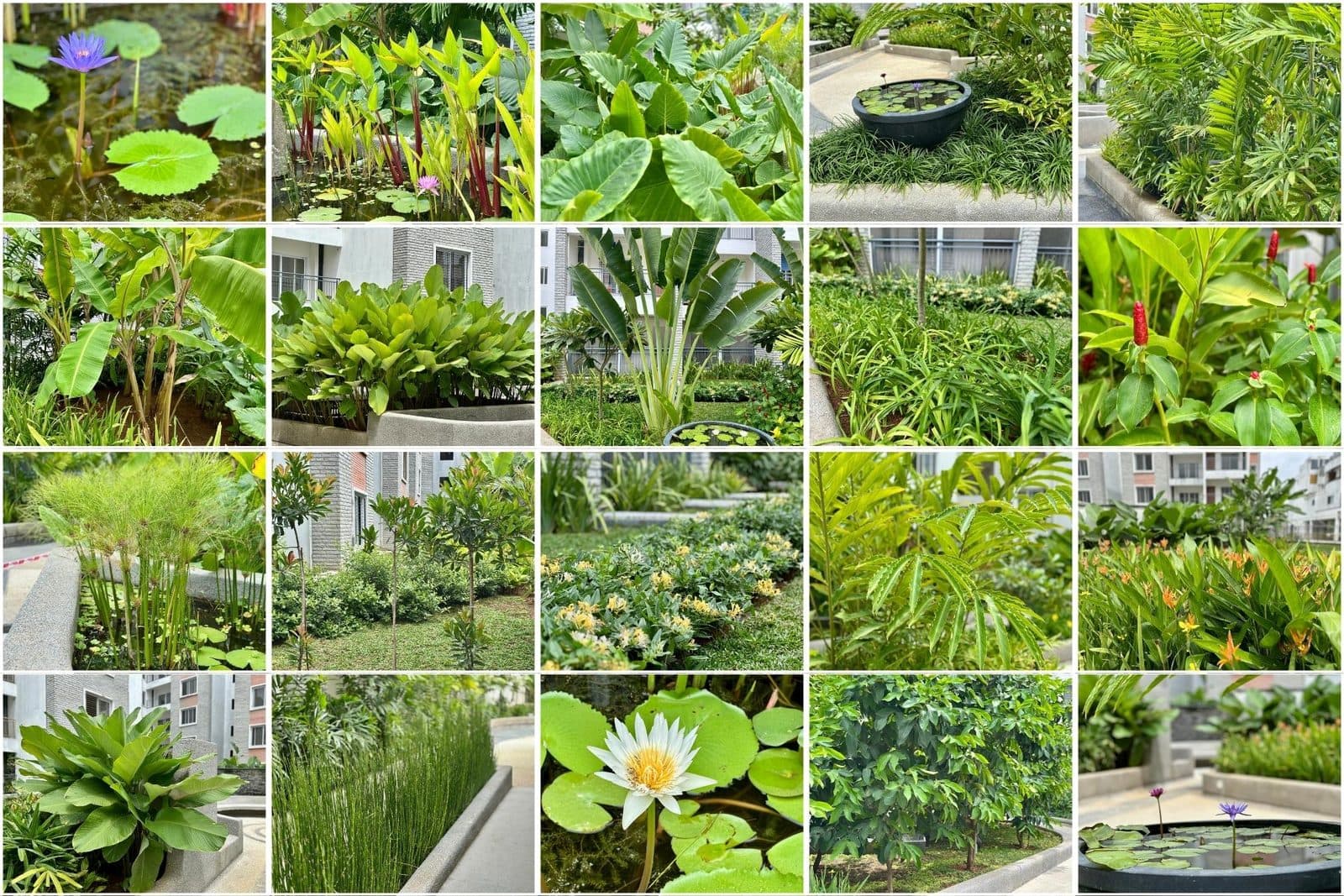
As you enter Nandi Meraki, follow the sound of water, which leads you to a courtyard where lily blooms float, papyrus rises from the water, and leaves grow large enough to make you look twice.
This is the Water Courtyard, one of five spaces inspired by the Panchamahabhutas, the five elements of nature.
Each courtyard at Nandi Meraki has a character of its own. Here, water features such as the Water Fountain Court, Immersive Water Experience Pavilion, Lotus Bowls and Bird Baths sit alongside a tropical garden inspired by the rainforest biome.
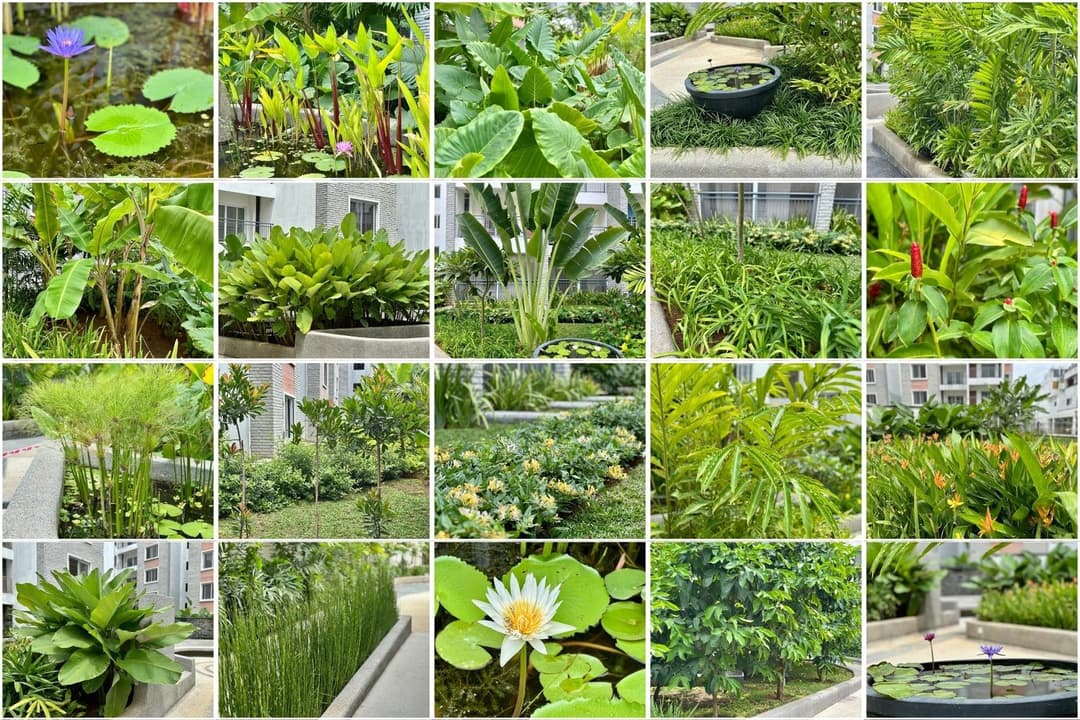
Plants grow in and around the ponds, creating a landscape that changes as you walk through it. There’s always something new to notice, a fresh bloom, an unusual leaf, the sound of water, or a bird stopping by.
Let’s get to know the plants that bring this courtyard to life.
Water lily (Nymphaea sp.)
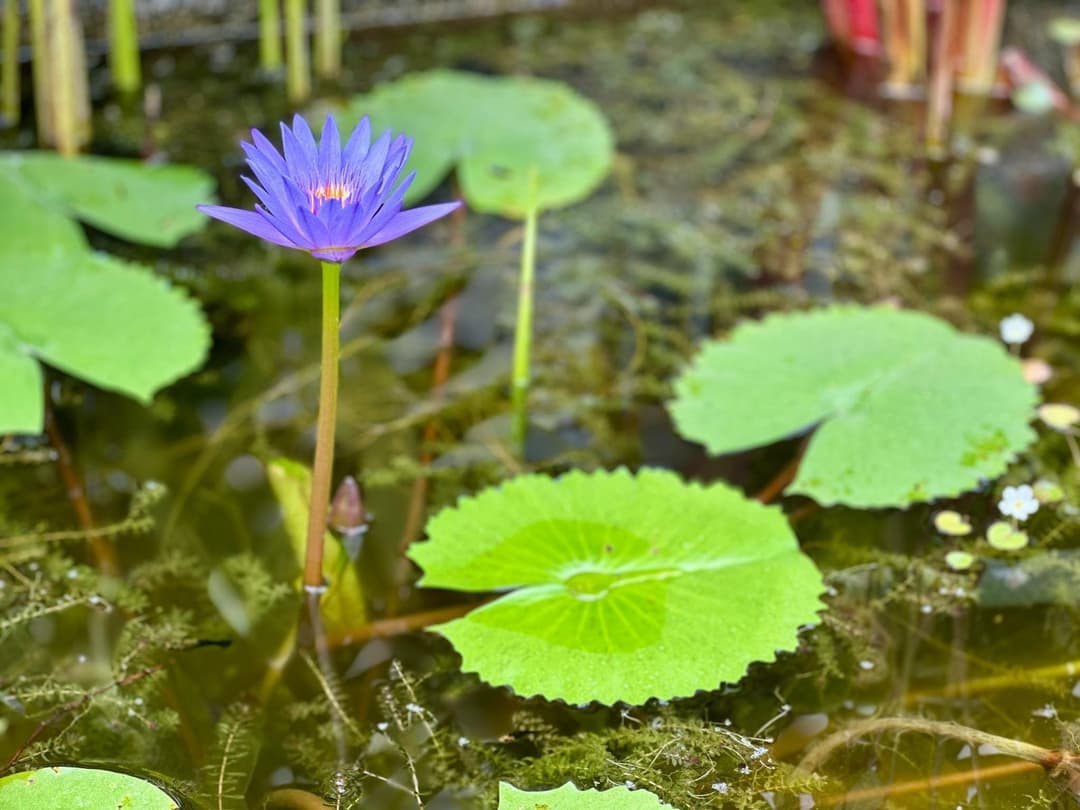
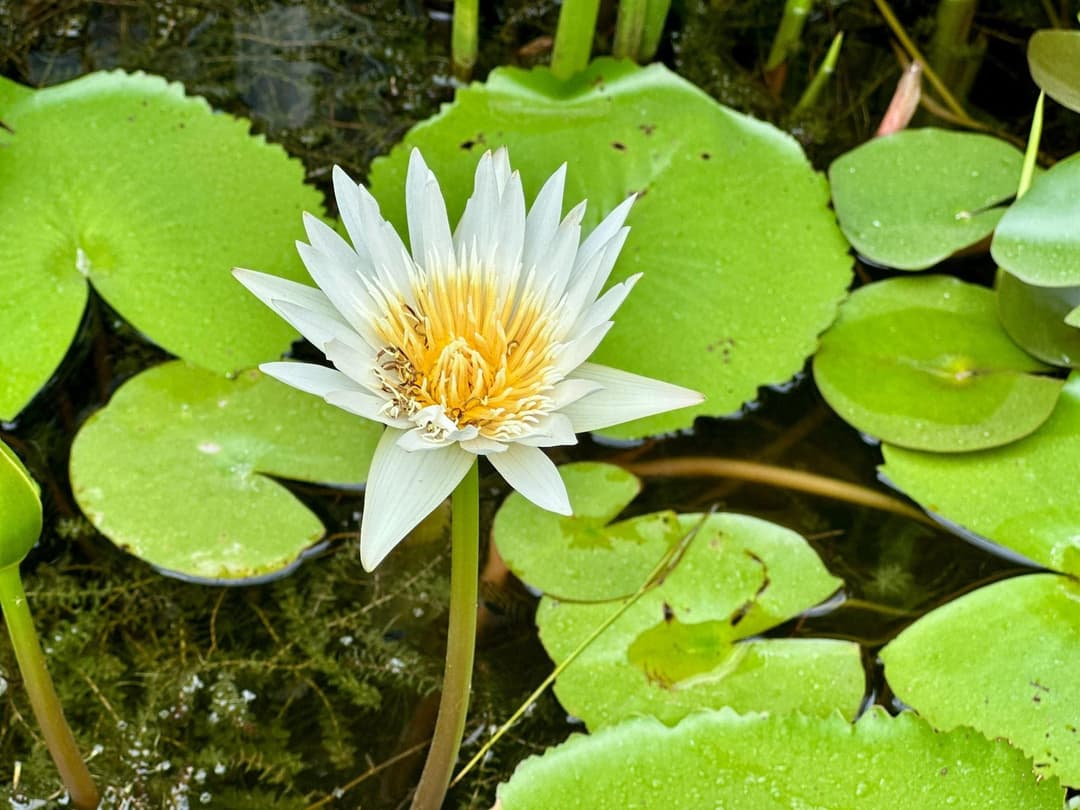
The water lily makes the pond feel like a garden in its own right. Rooted beneath the water, it sends round leaves across the surface and lifts its flowers into view. At the Water Courtyard, the purple, pink and white blooms draw your eye to the ponds, while their floating leaves bring patches of shade to the water and shelter for pond life. It’s a plant that belongs to the water as much as it beautifies it.
Alligator flag (Thalia geniculata)
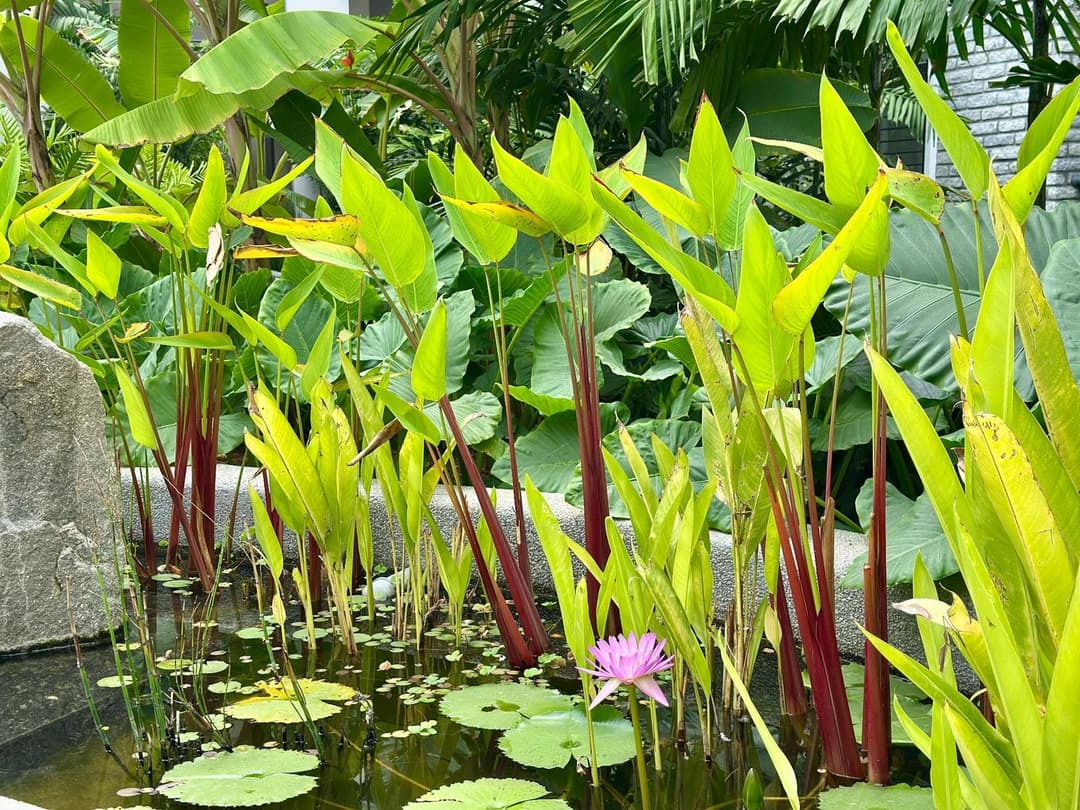
Native to tropical African and American regions, this plant has upright, pointed leaves rising from the shallow water behind the lilies. Their reddish stems add height and colour, making the edges of the pond as interesting as its surface. Look closely when it flowers: tiny blooms appear in pairs along a zigzagging stalk above the leaves.
Papyrus (Cyperus papyrus)
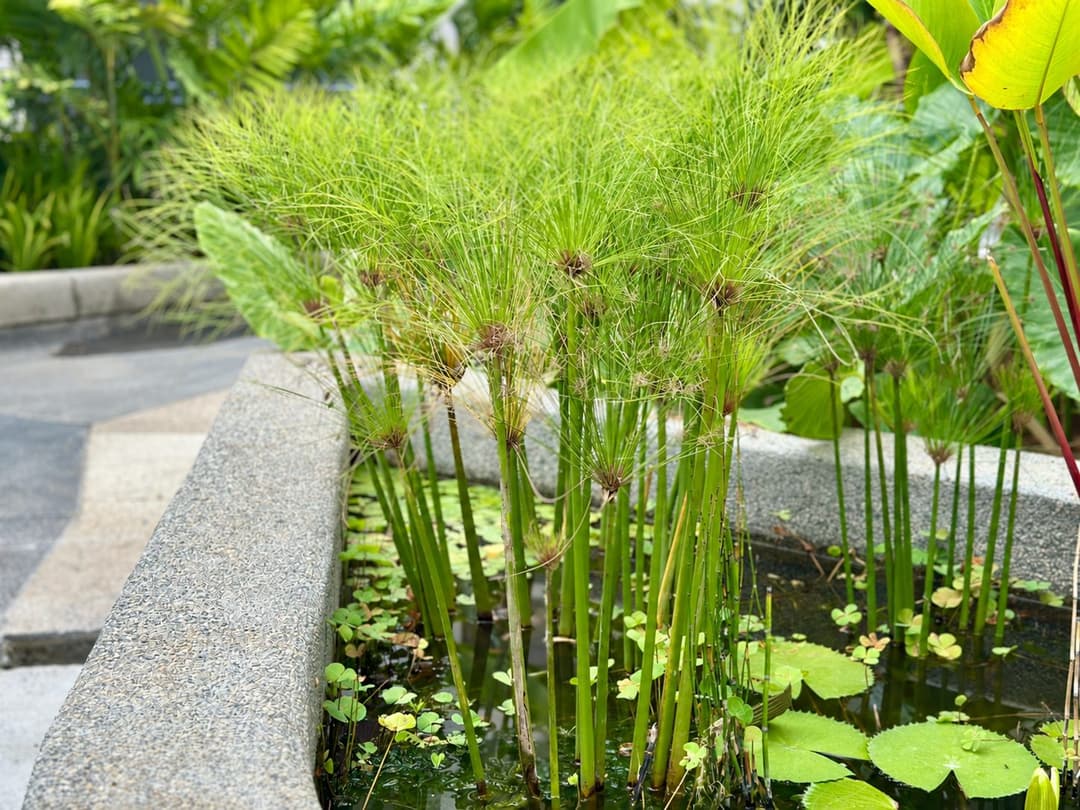
Papyrus is native to Africa and northern Israel region. It rises from the water on tall, slender stems, each topped with a fine spray that looks like a little green firework. In the Water Courtyard, it adds a soft, airy contrast to the broad leaves nearby. It also has a remarkable history: its stems were once used to make the writing material that shares its name.
Shoebutton ardisia (Ardisia elliptica)
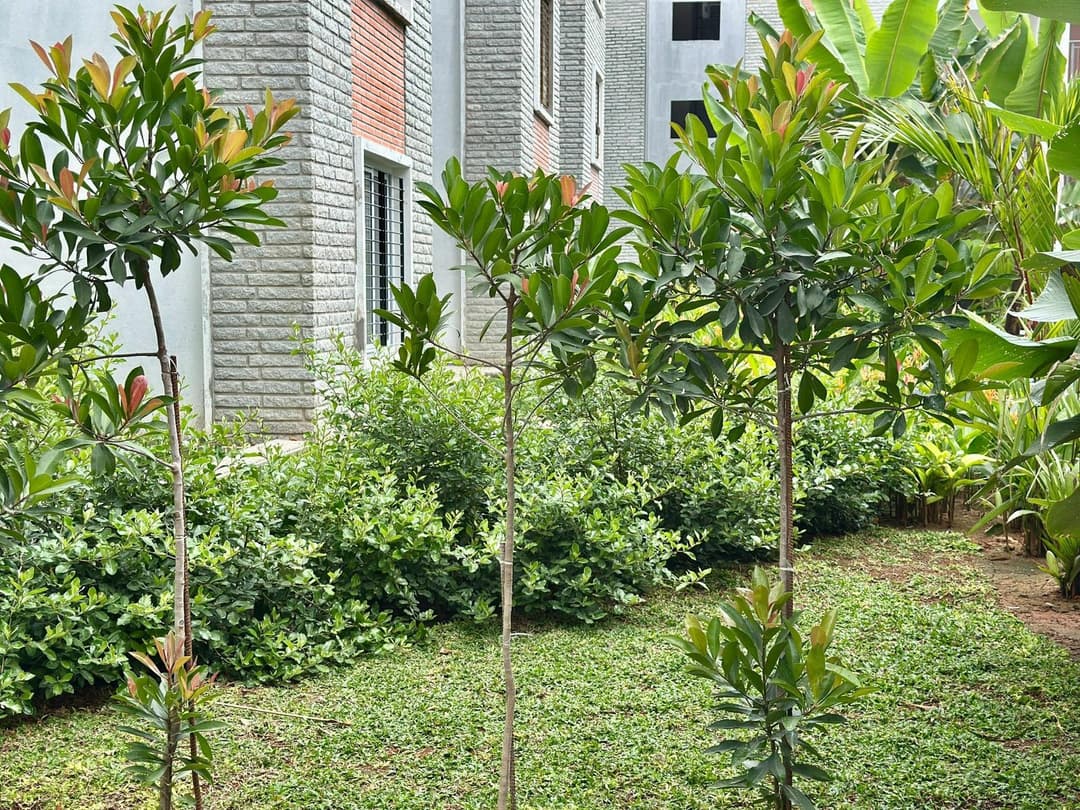
Shoebutton ardisia saves its most striking colours for the details: pink flowers give way to small berries that turn from reddish purple to almost black as they ripen. Native to parts of India and tropical Asia, it also grows naturally in coastal and mangrove forests. In the Water Courtyard’s garden, its glossy leaves and changing fruit add something new to notice on each walk.
Giant taro (Alocasia macrorrhizos)
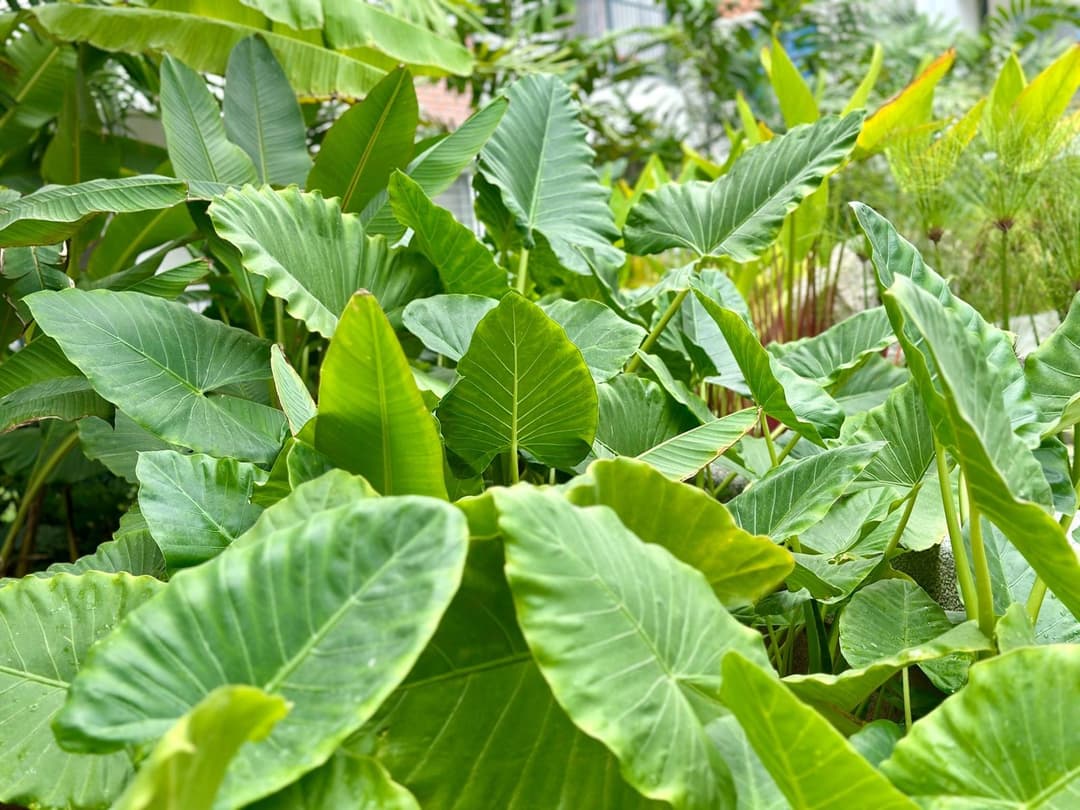
Giant taro holds its enormous leaves upright, giving the Water Courtyard its rainforest feel well beyond the ponds. Unlike the Colocasia elephant ear that can grow in shallow water, this relative grows in the garden soil. Native from the islands of Southeast Asia to northern Queensland, it shows how the courtyard’s water theme carries through the entire garden.
Flowering Banana (Musa ornata)
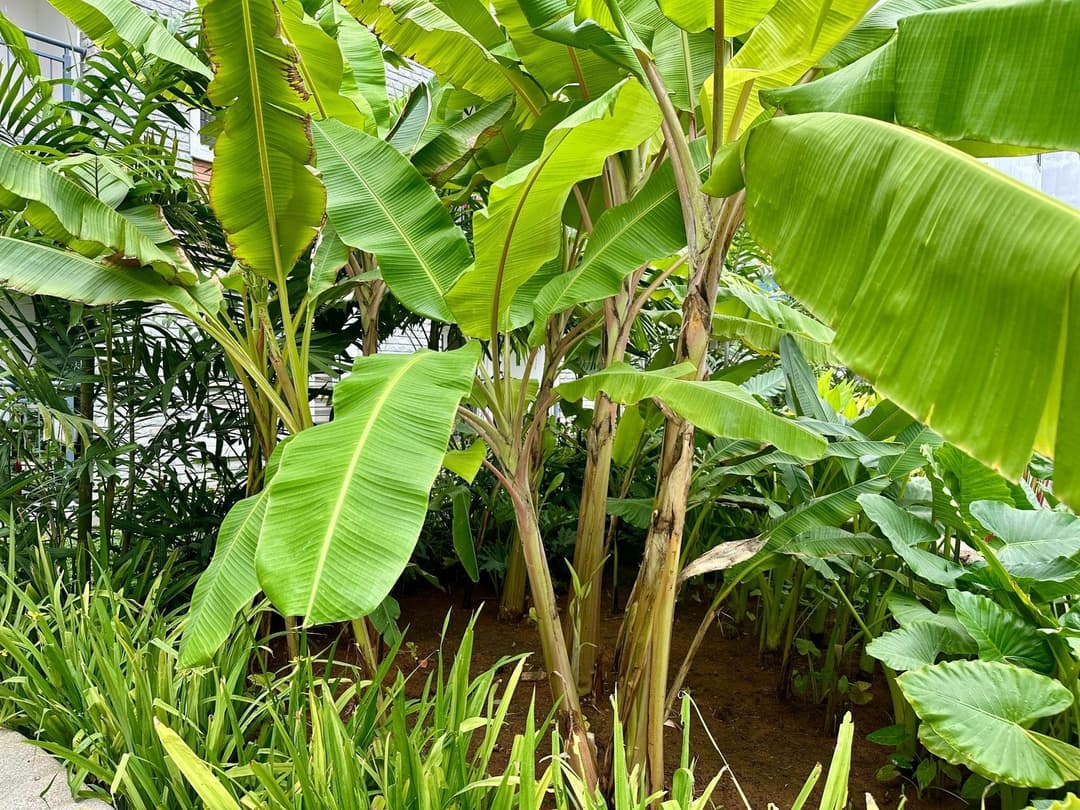
The flowering banana plant has a colourful surprise above its broad leaves. It produces an upright cluster of pink bracts, followed by a compact bunch of small bananas. Native from the eastern Himalayas to Myanmar, it grows in wet tropical forests. Its large leaves help create the courtyard’s lush, rainforest-inspired feel, while the pink display gives you another reason to stop and look up.
Macarthur palm (Ptychosperma Macarthurii)
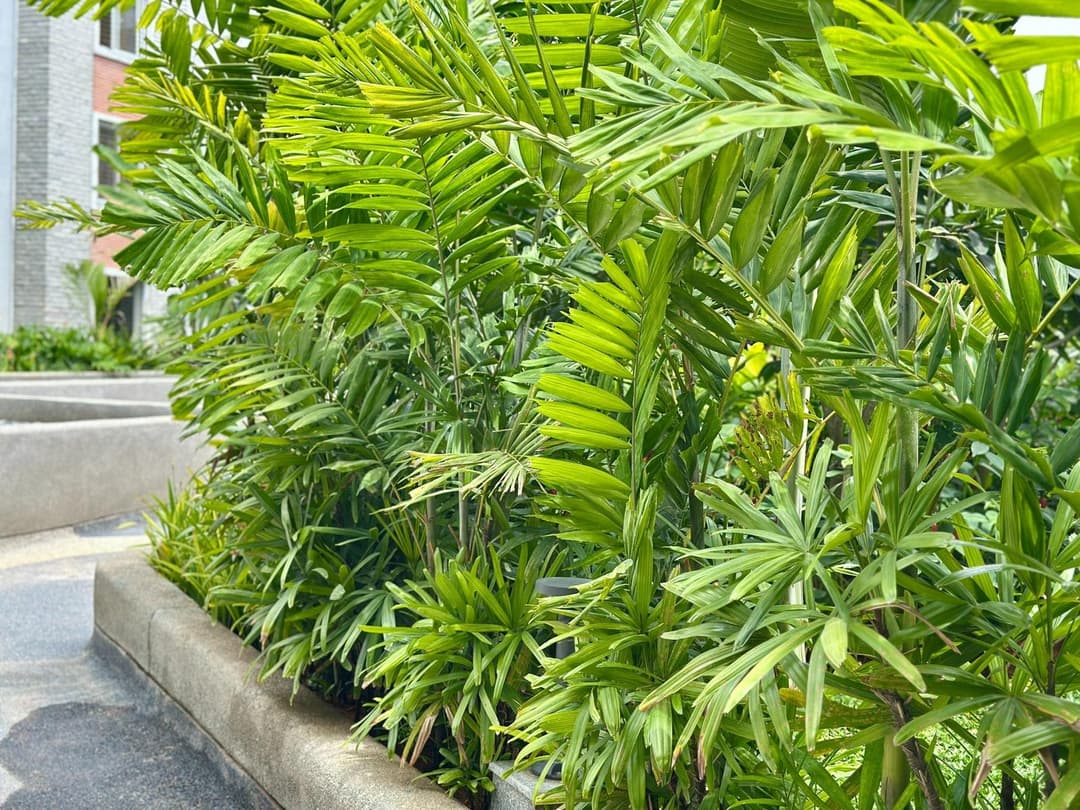
The Macarthur palm grows in a cluster of slender trunks, with feathery fronds that make the Water Courtyard’s garden feel fuller at eye level and above. Look closely at the tips of its leaflets: they appear neatly torn, a distinctive feature of this palm. Native to New Guinea and northern Australia, it can also produce small fruits that ripen bright red.
Cigar calathea (Calathea lutea)
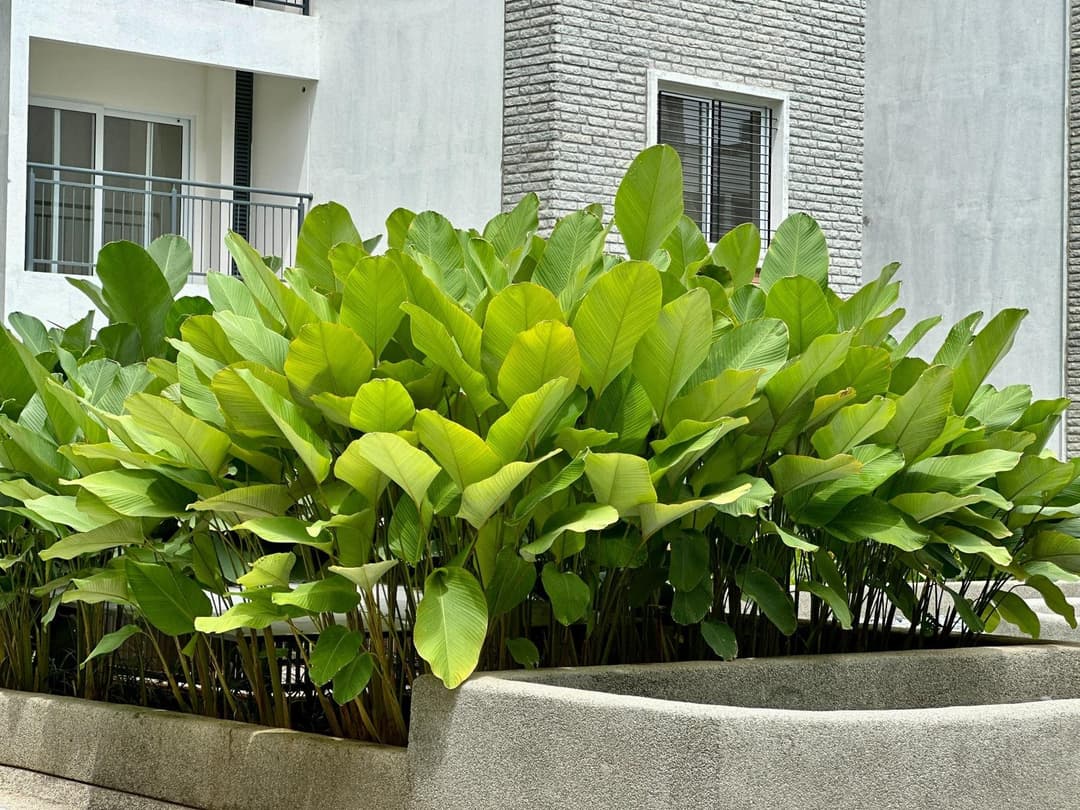
The cigar calathea has a side you might miss on a daytime walk. Its broad leaves are green above but silvery and waxy underneath. As evening falls, the leaves turn more upright and fold along their centres, revealing that pale underside. Native from southern Mexico through tropical America, it brings a little movement to the Water Courtyard’s landscaping.
Walking iris (Neomarica)
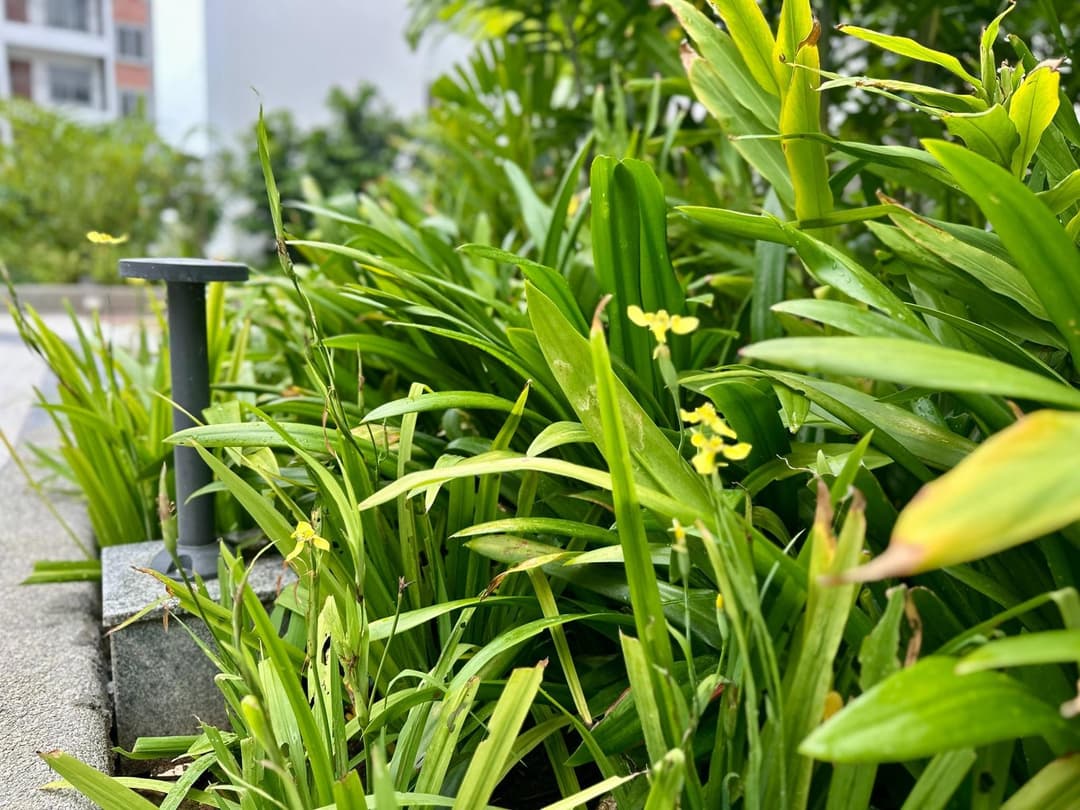
This iris earns its name after the flower fades. A tiny new plant can form at the end of the flower stalk; as it grows heavier, the stalk bends towards the ground, where the plantlet can take root. Native to tropical and subtropical America, this one adds a lovely sense of discovery to the Water Courtyard
Traveller’s palm (Ravenala madagascariensis)
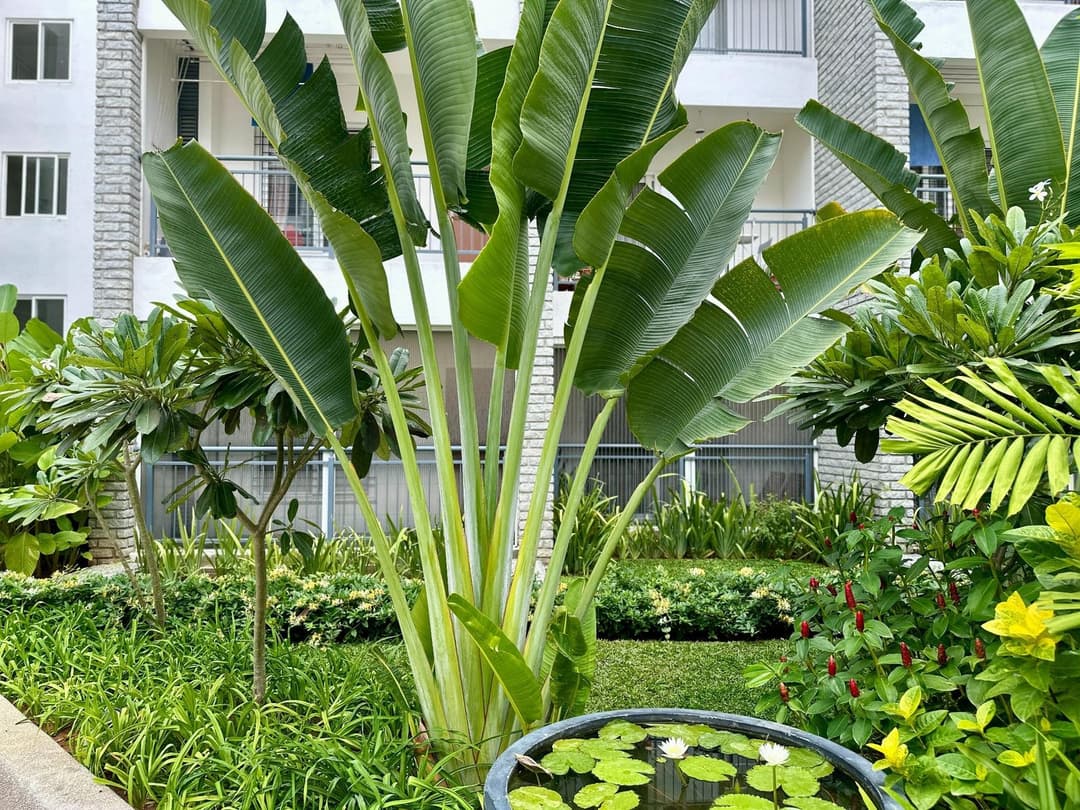
The traveller’s palm has a fitting story for the Water Courtyard: its cup-shaped leaf bases can collect rainwater. That feature helped give the plant its name, through stories of travellers finding water in its leaves. Despite the name, it isn’t a true palm. Native to Madagascar, its enormous leaves open in a single fan, making it one of the garden’s most distinctive shapes.
Orange Daylily (Hemerocallis fulva)
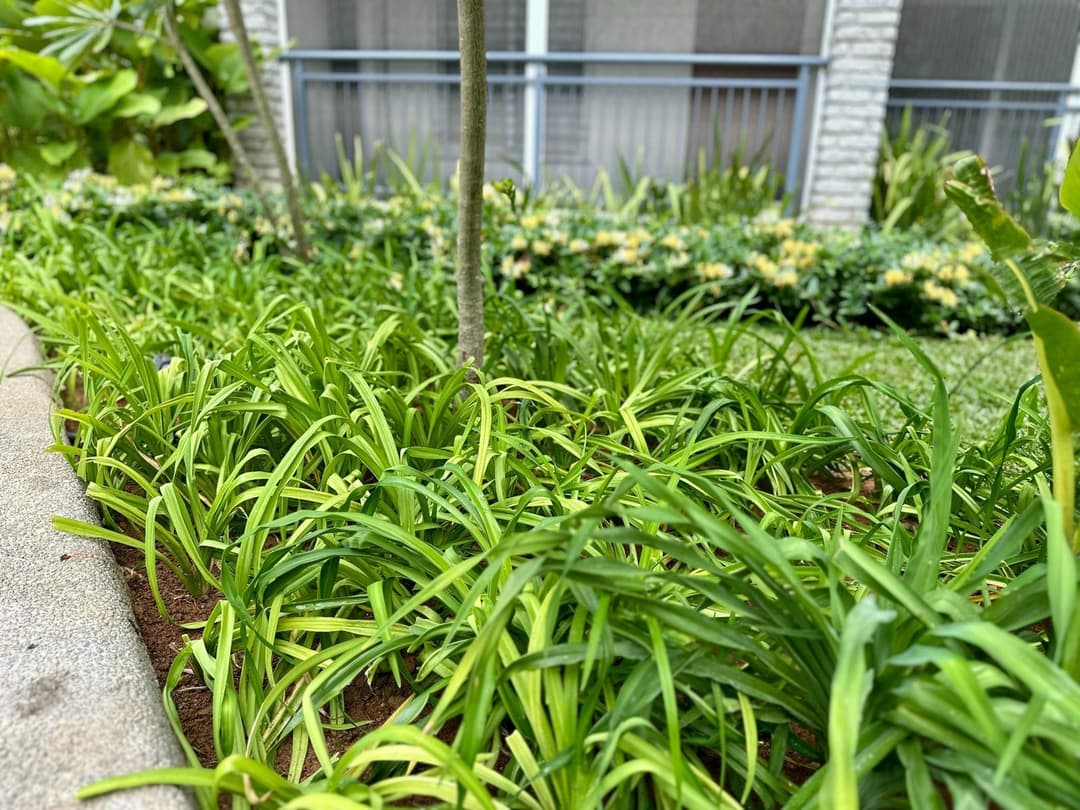
The orange daylily makes each bloom count: an individual flower typically lasts just one day, but new buds open in succession. Native to temperate East Asia, it brings a warm flash of colour among the Water Courtyard’s greenery. Its brief blooms are a good reason to take a closer look each time you pass.
Honeysuckle (Lonicera japonica)
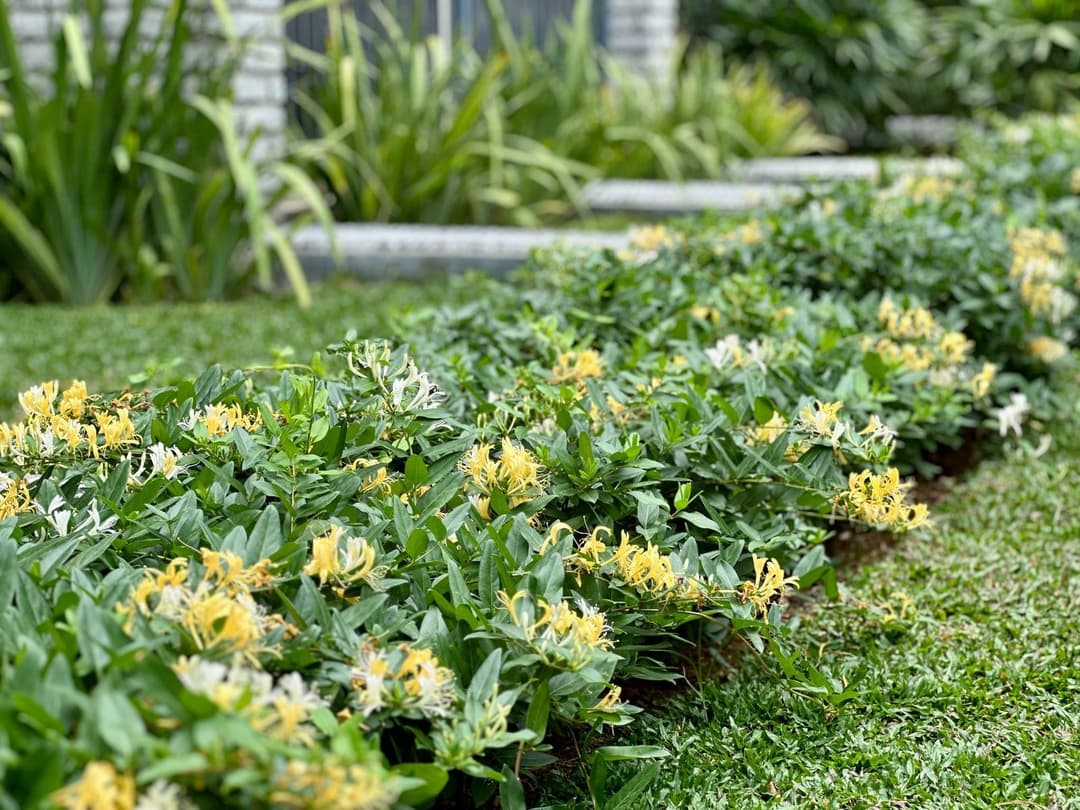
The honeysuckle has a way of announcing itself before it comes into view through its fragrance. This Japanese honeysuckle is a native to East Asia. Its slender blooms open white and turn creamy yellow as they age, so a single cluster can hold both colours. In the Water Courtyard, it gives the tropical garden something you can experience even with your eyes closed.
Red button ginger (Costus woodsonii)
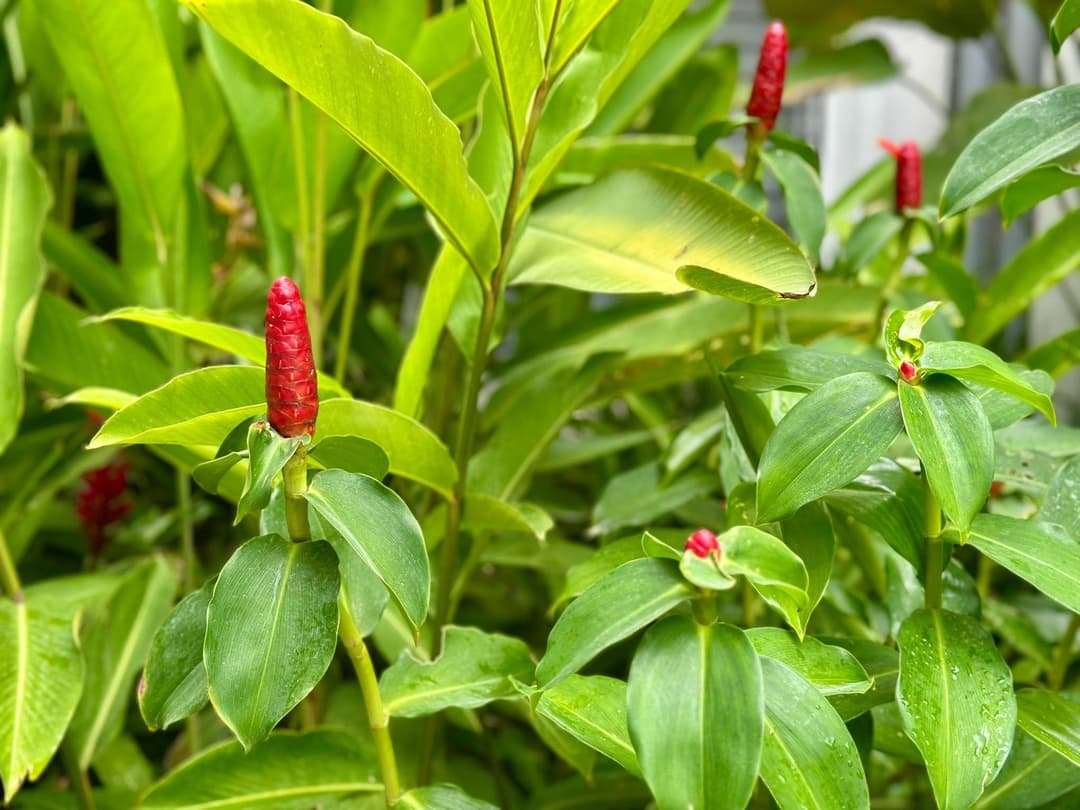
Those little red cones among the leaves are the reason this plant is called red button ginger. They are made of overlapping bracts, with small orange flowers appearing between them. Look beyond the bright red and you’ll find another detail: the leaves climb the stems in a spiral. Native from Nicaragua to Colombia, Red button ginger adds a vivid surprise to the Water Courtyard’s tropical garden.
Parrot heliconia (Heliconia psittacorum)
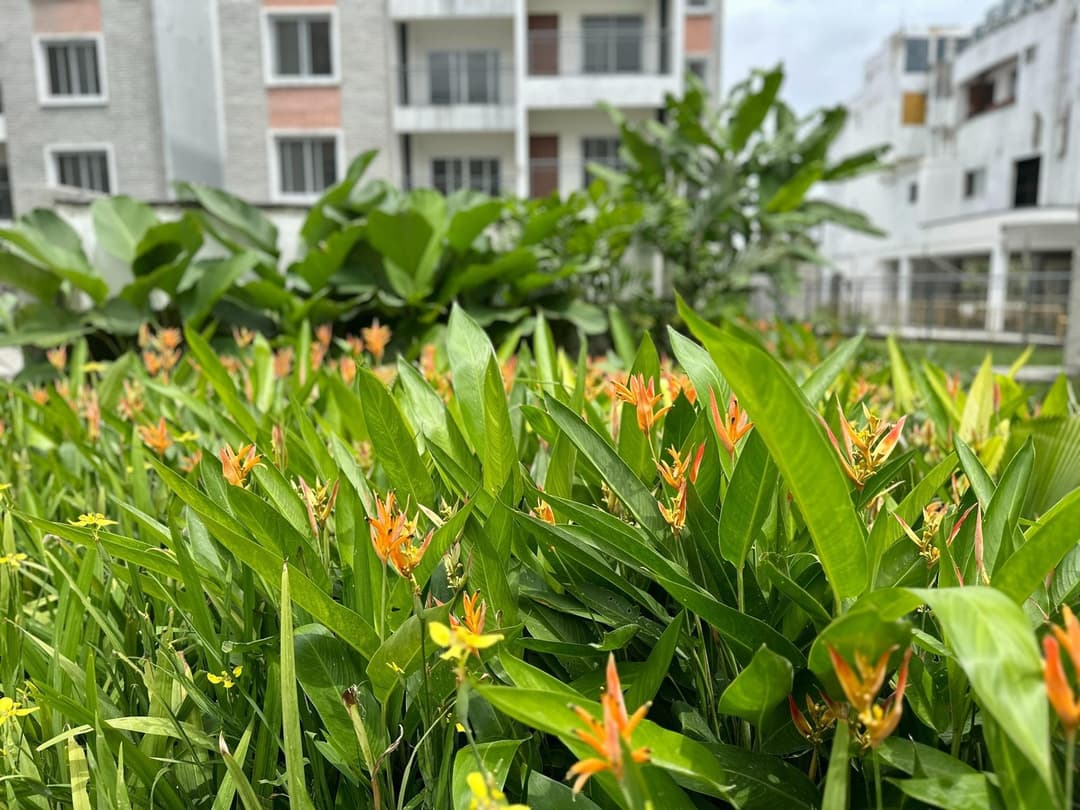
Parrot Heliconia makes for one of the most colourful parts of the Water Courtyard landscape. Those orange, beak-like shapes are bracts; the smaller flowers emerge from between them. In its native range, from Panama into tropical South America, nectar in those flowers attracts hummingbirds.
Horsetail (Equisetum sp.)
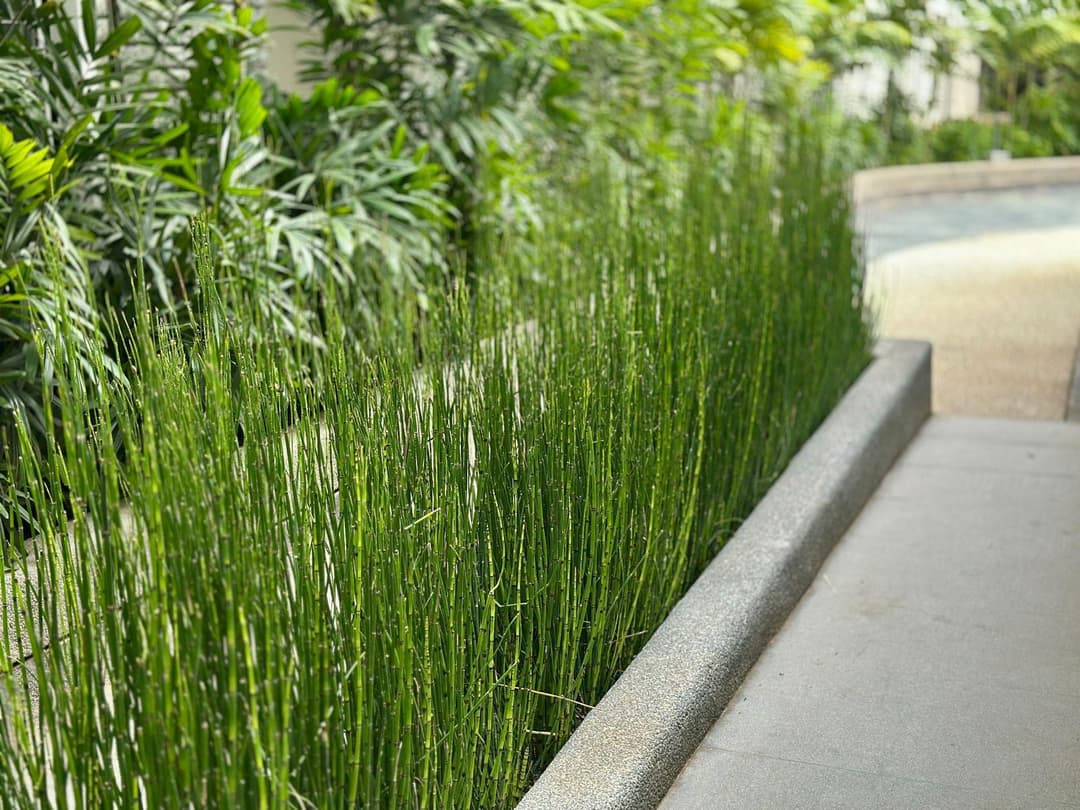
Horsetail gets its name from its resemblance to a horse’s tail, though here it’s the dense cluster of slender stems that brings the name to mind. It is a plant that produces spores instead of flowers. Its silica-rich stems were once used to scrub pots and polish metal, giving it another name: scouring rush. Horsetails are native to many parts of the world.
Torch Ginger (Etlingera elatior)
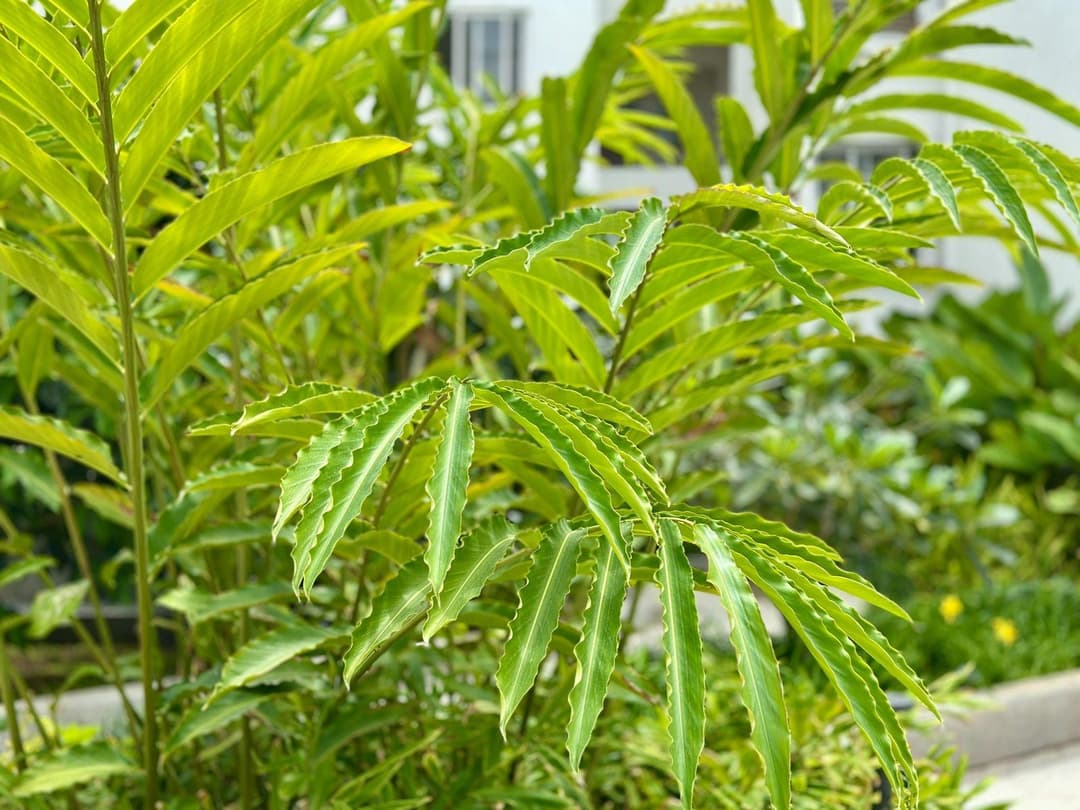
The torch ginger has a clever reveal: its pink or red flower head rises on a separate stalk straight from the ground, sometimes some distance from its tall leafy stems. Native from peninsular Thailand through western Southeast Asia, it brings the drama of a wet tropical forest into the Water Courtyard’s garden. Its young flower buds have another life in the kitchen, where they are used for their tangy, aromatic flavour.
Water Apple (Syzygium aqueum)
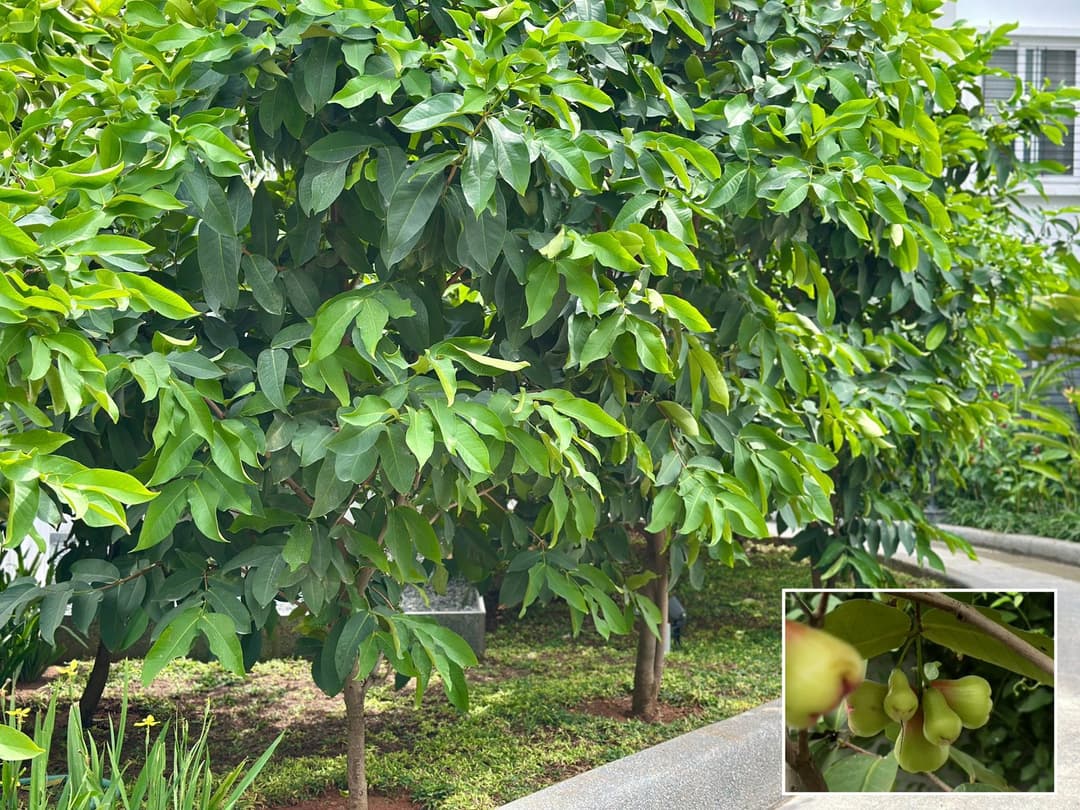
Tucked among the leaves are little green fruits shaped like bells. They give this tree its name: water apple. When ripe, the fruit has crisp, juicy flesh, and in the wild the tree often grows where water is readily available. Native from the Nicobar Islands through Southeast Asia to northern Queensland, it feels especially at home in the Water Courtyard, where the orchard brings another expression of water into the garden.
The next time you stroll through Nandi Meraki, you may recognise a few of these plants, remember their little stories, and see how each adds to the Water Courtyard.
Looking for a nature-inspired home that also boasts a range of sustainable features? Come visit Nandi Meraki, where you can explore the Water Courtyard and discover how thoughtfully selected plants enrich the living experience.
Schedule your site visit today and experience Nandi Meraki firsthand. Located near Bannerghatta Road and close to Kalena Agrahara Metro Station, your future home is just a visit away.
Thinking about your next home?
Talk to our team about Nandi Meraki and Nandi Citadel, or explore our other stories.