Switching on a geyser before a shower is a routine so embedded in daily life that nobody stops to question the impact on the environment and what it actually costs.
A standard electric geyser rated at 2,000 watts, used two to three hours daily, consumes 120 to 180 units of electricity a month. At Karnataka’s prevailing domestic tariff, that is ₹660 to ₹1,350 a month from a single appliance. But the more consequential cost is not on the bill, it shows up somewhere far less visible – our environment.
What your geyser is actually burning
Around 70% of India’s electricity is still generated by burning coal. Every time an electric geyser is switched on, it draws power from a grid that largely depends on coal. Every unit of electricity a geyser draws from the grid results in carbon emissions. Based on India’s grid emission factor published by the Central Electricity Authority, producing one unit of electricity requires burning roughly 0.45 kg of coal. A household running a standard geyser through the year is responsible for approximately 450 kg of coal burned, just for hot water.
Multiply that across an apartment complex of 444 homes and the number becomes difficult to ignore.
The decision that changed the math
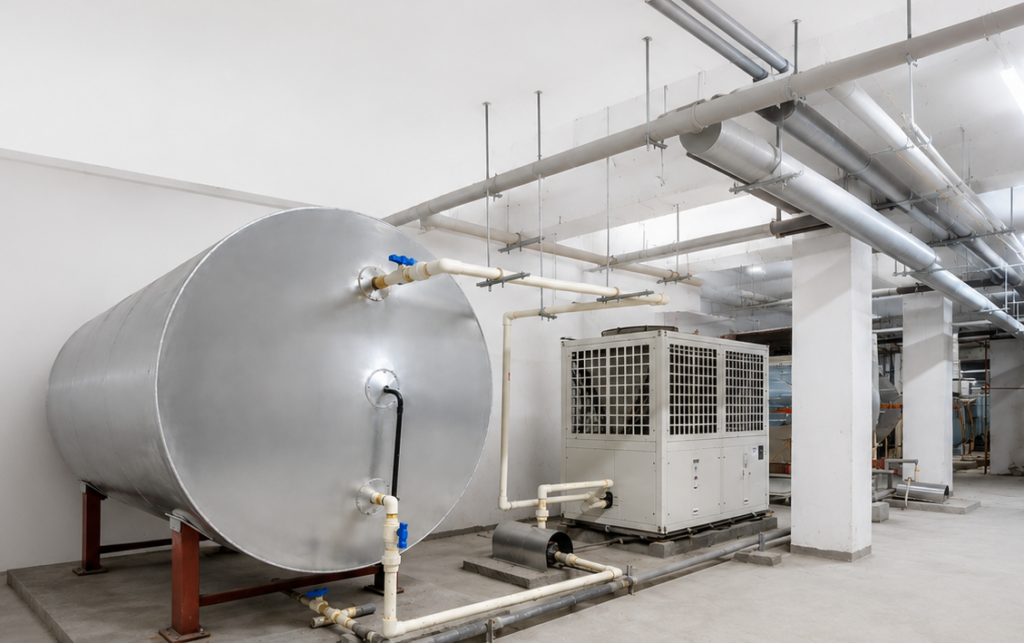
Nandi Meraki, a residential project off Bannerghatta Road in south Bengaluru, made a conscious call early on in the project to make this project as energy efficient as possible. Instead of individual geysers, the community runs on a centralised heat pump system that supplies hot water to all 444 homes, 24 hours a day. Unlike conventional geysers, which use electricity to heat a coil immersed in water, heat pumps draw heat from the surrounding air and transfer it to the water. Because they move heat rather than generate it, they are significantly more energy efficient, using two to three times less electricity to deliver the same amount of hot water.
That single infrastructure decision eliminated the per-home geyser load entirely.
Solar panels and what they give back
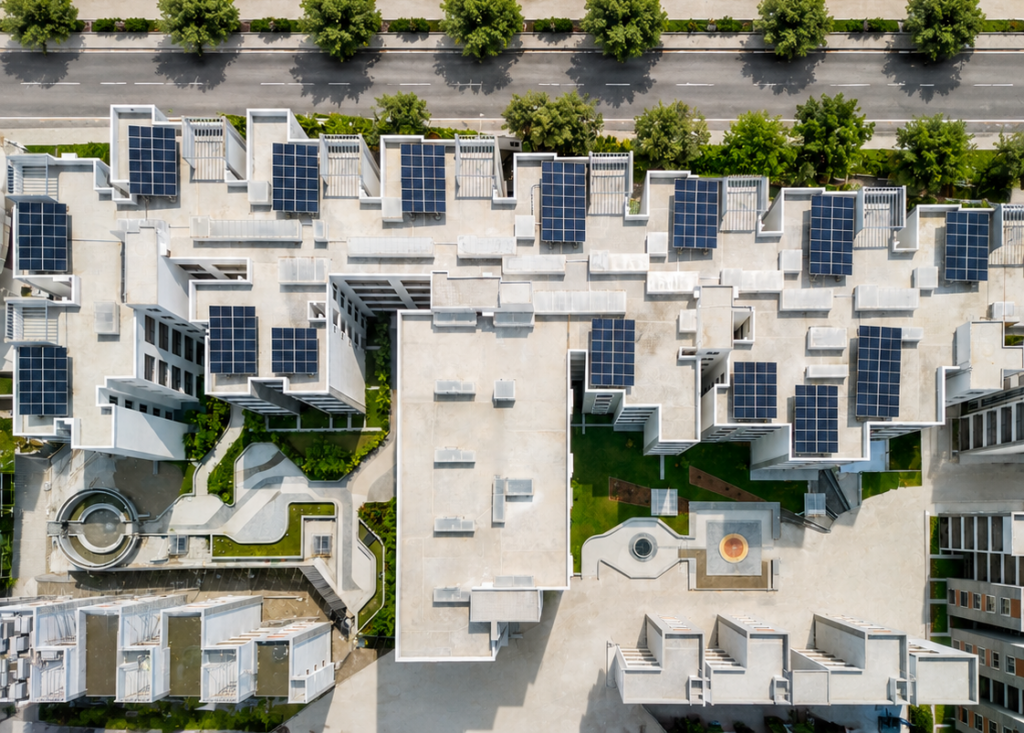
Nandi Meraki has installed solar panels that generate up to 6 lakh units of electricity annually. This electricity first powers Nandi Meraki’s common area lighting, pumps, lifts and centralised heat pumps and the excess power is fed into the grid through a net metering system, actively contributing clean energy to the grid.
At India’s current coal consumption rate per unit of electricity, 6 lakh units of solar generation produced in Nandi Meraki offsets the burning of approximately 240 to 270 tonnes of coal annually, which translates to that much coal that do not need to be mined, transported, or combusted to meet the city’s electricity demand.
Why this matters beyond one project
Bengaluru’s electricity demand is growing, and the grid’s ability to meet peak morning loads, driven significantly by water heating across hundreds of thousands of homes, is under steady pressure. If every housing project follows the example set by Nandi Meraki and eliminates individual geysers which return clean energy to the grid, thereby reducing the pressure in a direct, measurable way.
The interesting thing is that nobody had to give anything up. The hot water still runs and the lights still work. The only thing that changed was the conscious decision to switch to clean energy from the start of the project.
At some point, it stops being about carbon emissions and starts being about the choices we make which contributes to the larger good. Nandi Meraki has already made that choice.




0 Comments