Bengaluru has always been defined by its climate – the gentle sun, the cool breeze, the rhythm of its rain. But as the city grows denser and greener spaces give way to concrete, its once-balanced microclimates are shifting. Designing homes here is no longer just about comfort; it’s about adaptation. Climate-responsive architecture isn’t a futuristic concept, it’s a return to what the city has always known. By understanding the land, the wind, and the water that once shaped Bengaluru’s charm, we can build homes that don’t fight the weather but flow with it – homes that belong to their place, their people, and their time.
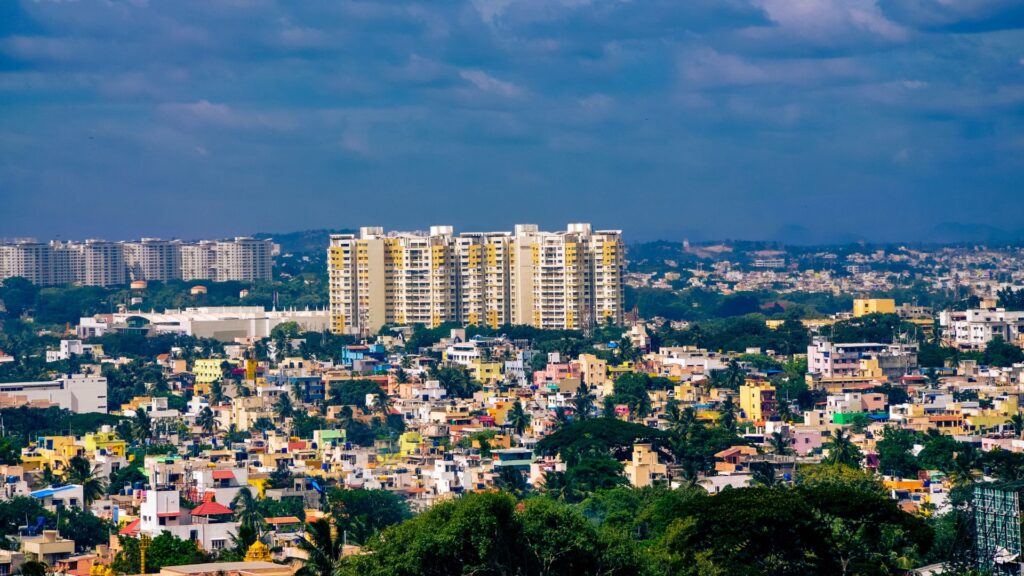
Where Lakes Once Cooled the Air
Bengaluru sits over 900 meters above sea level, on the Deccan Plateau. Its terrain is a quilt of gentle ridges and valleys, stitched together by what was once a network of over a thousand interconnected lakes. These lakes didn’t just store water, they helped moderate the city’s climate. Areas close to water bodies were cooler and more humid, while tree-heavy zones like Basavanagudi or Sadashivanagar stayed naturally temperate even in summer.

The city’s signature evening breeze comes from temperature differences created by this topography – hot air rising from built-up areas while cooler air flows in from greener outskirts. The result? A kind of natural ventilation system that Bengaluru has quietly perfected over centuries.
But as more concrete replaces green cover, these microclimates are shifting and the challenge for architects is to design homes that adapt gracefully to this changing rhythm.
Climate-Conscious Design for Today
A home that’s right for you doesn’t fight the weather, it works with it.
- Orientation matters. Positioning rooms and balconies to catch crosswinds from the southwest or southeast can reduce indoor temperatures by up to 4-5°C.
- Courtyards and open corridors act like lungs pulling in fresh air, filtering sunlight, and releasing warm air upwards.
- Local materials like granite, stone cladding, and lime plaster keep walls cool, absorbing heat slowly during the day and releasing it at night.
- Green buffers – trees, creepers, shaded verandahs make a bigger difference here than anywhere else, because Bengaluru’s mild temperatures allow plants to thrive year-round.
- Water proximity near lakes influences humidity, so spaces benefit from natural shade, airflow, and materials that handle moisture well.
When architecture respects these subtle differences, it does more than create comfortable homes, it creates harmony between city, climate, and community.
The Character of a Bengaluru Home
Older neighborhoods already knew this instinctively. The classic Bengaluru home with tiled roofs, stone walls, airy verandahs, and shaded courtyards was an architectural love letter to the city’s weather. Evenings were meant to be spent outside, under trees that filtered the fading light. Summers were softened by the cool of stone and open air.
Modern sustainable design in the city is rediscovering what older homes always knew, that comfort doesn’t come from technology alone, but from a building’s relationship with its environment.
Made for This City
At Nandi Housing, this philosophy has always guided design.
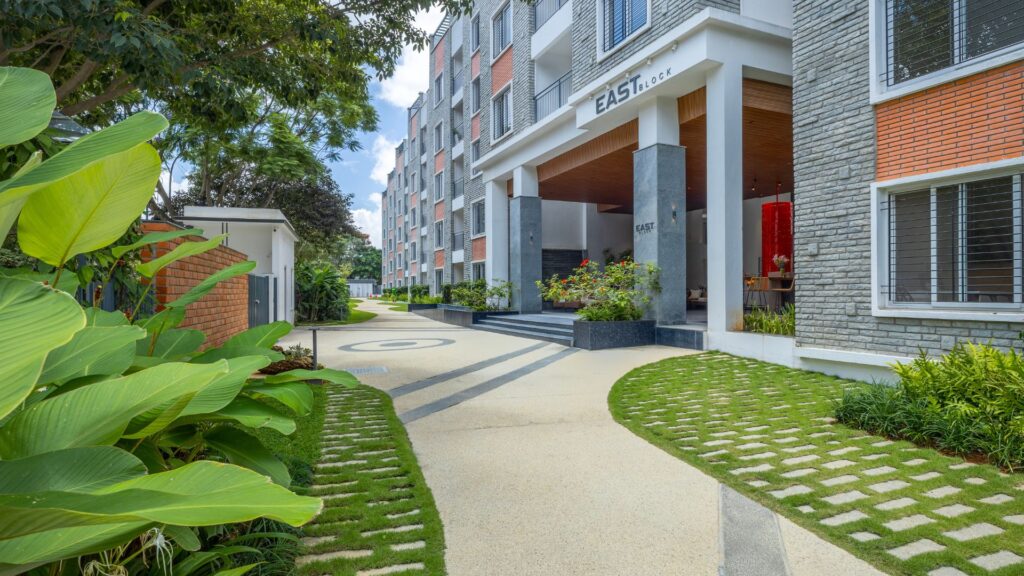
For instance, Nandi Housing’s latest project, Nandi Meraki, set beside a 14-acre lake, is shaped by the same logic the city itself follows. Stone cladding keeps homes naturally cool. Open corridors and green courtyards invite the city’s breeze indoors. At its heart lie the Panchamahabhuta courtyards – five open spaces inspired by the elements of earth, water, fire, air, and space – each designed to balance light, wind, and temperature naturally. The abundance of greenery softens the urban heat, while thoughtful orientation ensures that sunlight and wind move through each space in harmony.
These aren’t design choices borrowed from elsewhere, they are responses to this place, this climate, this city.
A Quiet Understanding
Every street in Bengaluru feels a little different – the air, the light, even the smell after rain.
And the best homes are the ones that acknowledge that difference, that belong to their place rather than exist despite it.
Because to design for Bengaluru is to listen – to its wind, its warmth, its changing skies and to build not just for comfort, but for connection.


0 Comments